
 English
Views: 0 Author: Site Editor Publish Time: 2025-10-14 Origin: Site


Automotive stamping is one of the most essential processes in modern car manufacturing. It transforms flat sheets of metal into highly precise and durable parts that form a vehicle’s body, chassis, and key structural components. This process not only defines the strength and safety of a car but also contributes to its overall performance, weight, and fuel efficiency.
Understanding how automotive stamping works allows manufacturers and engineers to optimize production, minimize material waste, and ensure quality at every stage of the process. From die design and material preparation to forming, trimming, and finishing, every step requires precision and coordination.
In this article, we’ll explore the complete automotive stamping process in detail — how it functions, the technologies behind it, and the innovations driving its future. By the end, you’ll have a clear picture of why automotive stamping is vital to creating safer, lighter, and more sustainable vehicles.
Automotive stamping, also known as metal stamping for the automotive industry, is a process that shapes flat metal sheets into specific vehicle components using dies and high-tonnage presses. Each die has a cavity that matches the desired shape of the part. When a metal sheet is pressed between the dies, it takes the intended form with high precision.
This process is widely used to manufacture doors, hoods, fenders, chassis parts, and interior brackets. Because of its speed, accuracy, and repeatability, stamping remains one of the most cost-effective mass-production techniques in automotive manufacturing.
Automotive stamping ensures consistency across thousands of identical parts. It allows car manufacturers to maintain structural integrity while keeping production costs under control. The process supports:
● Precision – Tight tolerances that ensure exact part fitting.
● Efficiency – High-volume production at lower labor costs.
● Safety – Strong, uniform panels that meet crash performance standards.
● Aesthetics – Smooth, flawless surfaces for visible body parts.
Without stamping, automakers would struggle to produce the complex, high-strength components modern cars require.
The automotive stamping process relies on various metals, each chosen for specific performance criteria:
Material | Key Benefits | Typical Applications |
Steel (carbon or stainless) | Strong, cost-effective | Structural and safety components |
Aluminum | Lightweight, corrosion-resistant | Body panels, EV components |
Titanium | High strength-to-weight ratio | Exhaust and performance parts |
Copper and alloys | Conductivity | Electrical connectors, terminals |
Each material behaves differently during forming, so engineers carefully select alloys and coatings to match part requirements.
Tip: For B2B buyers, partnering with suppliers that specialize in high-strength steel and aluminum stamping can significantly enhance both vehicle performance and sustainability goals.
Every successful stamping project begins with precise design and simulation. Engineers use CAD (Computer-Aided Design) and CAE (Computer-Aided Engineering) tools to create and test die designs virtually. Simulations help predict how the metal will deform, reducing the risk of cracks or springback before production begins.
Before stamping, metal coils or sheets are cut into blanks — pre-sized pieces matching the outline of the part. Blanking ensures minimal waste and proper alignment within the stamping press. Advanced blanking systems can feed metal continuously for large-scale production.
During this stage, a stamping press applies immense pressure, forcing the blank into the shape of the die cavity. Depending on complexity, multiple operations—like bending, stretching, and drawing—may occur in sequence. Hydraulic and mechanical presses can generate forces exceeding several hundred tons.
Note: The force required depends on material thickness, hardness, and the part’s geometric complexity. Engineers must balance these factors to prevent tearing or wrinkling.
After forming, excess metal is trimmed away to refine edges and remove unwanted material. Piercing adds holes, slots, and cutouts for assembly and mounting. These processes are critical for precision alignment during later assembly.
Once formed, the stamped part undergoes deburring, cleaning, and surface treatments such as coating or plating. These steps improve appearance, prevent corrosion, and prepare the part for painting or welding. Automated inspection systems check for dimensional accuracy and surface defects.
Finally, stamped components are assembled into larger vehicle systems — such as doors, hoods, frames, or seat structures. Robots or skilled technicians weld, bolt, or rivet the parts into subassemblies that move to the body shop or final assembly line.
Progressive die stamping involves a metal strip moving through multiple die stations, each performing a unique operation—such as punching, bending, or forming. By the time the strip exits the press, a complete part is finished.
Benefits:
● High production speed
● Reduced labor and setup costs
● Consistent accuracy across parts
This method is ideal for small to medium-sized components like brackets or connectors.
In transfer die stamping, the part is physically transferred between separate dies by mechanical arms or automated systems. It’s used for large or complex parts that require multiple forming stages.
Best For: Structural panels, fuel tanks, and deep-formed parts requiring precision at every stage.
Deep draw stamping forms flat metal blanks into deep, cup-like shapes, using a punch that stretches the metal into a die cavity. Common examples include oil pans, fuel housings, and pressure vessels.
This technique minimizes material waste and offers excellent dimensional stability.
Four-slide (or multi-slide) stamping uses four horizontal slides to bend and cut the metal simultaneously from different angles. It excels at producing intricate parts with multiple bends—often for clips, fasteners, and electrical components.
Tip: When ordering custom metal parts, consider four-slide stamping if your design includes multiple bends or tight geometric requirements. It can reduce tooling changes and production time.
This hybrid process uses magnetic pulses to enhance the formability of sheet metal. It distributes stress more evenly and allows for shaping high-strength materials without cracks. This innovation is particularly valuable in lightweight automotive stamping applications.
Modern stamping lines increasingly rely on robotic automation and AI-based monitoring. Robots handle part transfer, tool changes, and quality inspection with high precision, reducing downtime. AI systems analyze press data to predict failures and optimize press performance.
A digital twin is a virtual replica of the stamping process. It allows engineers to test and optimize tooling, part geometry, and press parameters in real-time. This reduces physical prototyping costs and shortens time-to-market.
To improve fuel efficiency and EV range, automakers are turning to lightweight alloys like aluminum and advanced high-strength steels (AHSS). These materials require more sophisticated stamping processes but deliver better crash resistance and efficiency.
When metal is formed, it tends to spring back slightly after the press releases pressure. Engineers combat this by adjusting die angles, material flow, or using specialized springback compensation software.
High precision is non-negotiable in automotive stamping. Regular tool calibration and sensor-equipped presses help detect deviations instantly, ensuring tight tolerances throughout production.
Optimizing blank layouts and reusing scrap material can save up to 15–20% of raw metal costs (data to be verified). Efficient nesting software helps reduce waste while maintaining part integrity.
Die wear can cause shape inconsistencies. Predictive maintenance systems use sensors to track tool life and schedule timely maintenance, preventing costly downtime.
Note: Preventive maintenance programs can extend die lifespan by up to 30%, improving both efficiency and part quality.
Process | Key Advantages | Best Use Cases | Limitations |
Stamping | Fast, accurate, scalable | High-volume auto parts | High setup cost |
Casting | Complex 3D shapes | Engine blocks, housings | Slower, heavier parts |
Machining | High precision | Prototypes, small batches | Material waste |
Forging | Strength and toughness | Crankshafts, gears | Limited shape flexibility |
Automotive stamping stands out for its balance of cost-efficiency and precision, making it the go-to method for producing high-volume vehicle components.
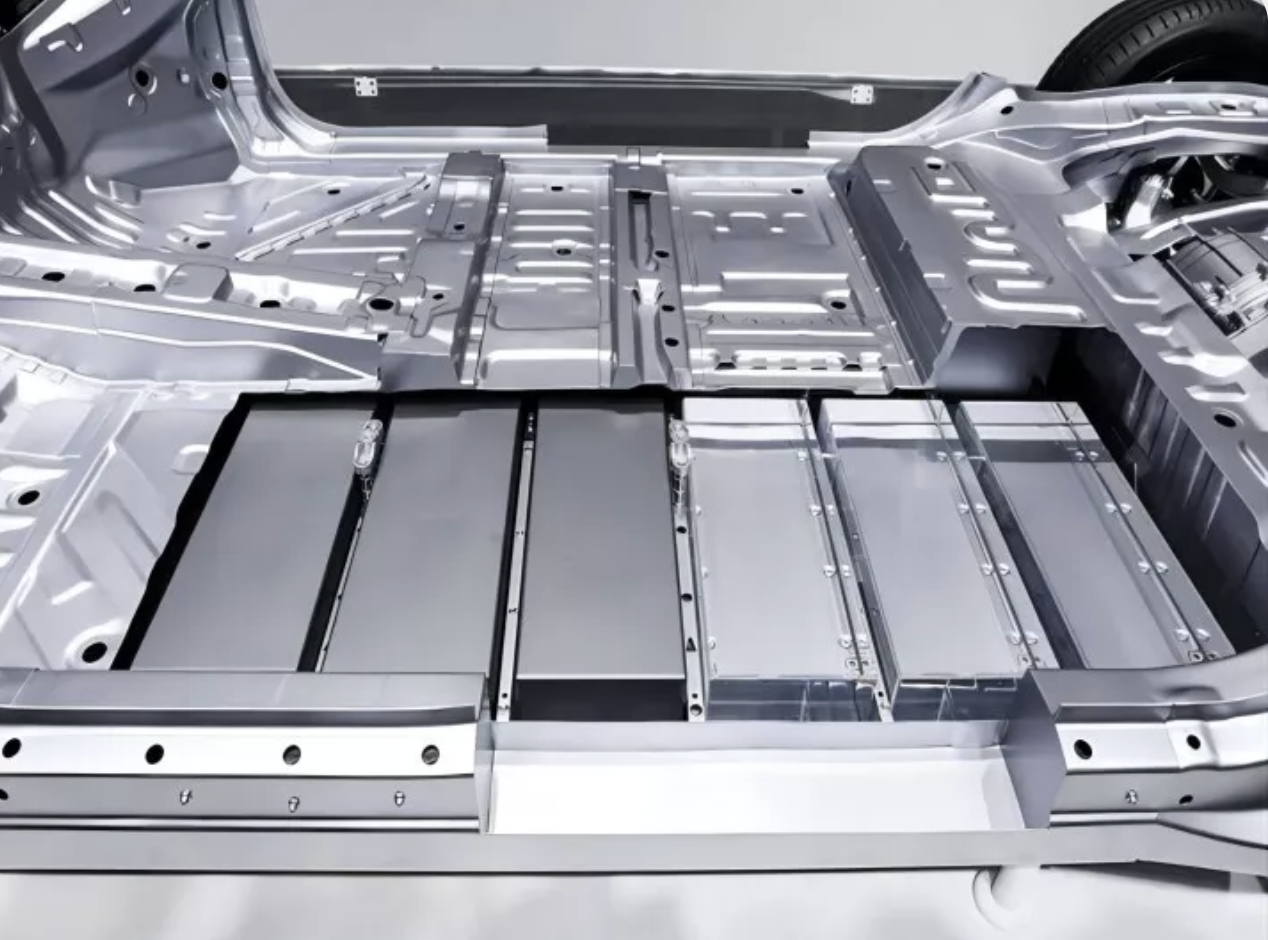
Stamped structural parts such as chassis members, subframes, and reinforcements provide the backbone of every vehicle. These components ensure strength, stiffness, and crash performance.
Doors, roofs, and fenders rely on stamping to achieve aerodynamic shapes and smooth surfaces. The consistency of the process ensures flawless finishes ready for painting.
Seat frames, brackets, and locking systems are produced through stamping to ensure reliability and precision. Consistency in these parts directly affects passenger safety.
From fuel injector housings to battery connectors, stamping supports high-precision, small-scale metal components vital to modern vehicles.
Electric vehicles demand lightweight materials for greater range. Automotive stamping is adapting to shape aluminum and mixed-material battery housings, cooling plates, and motor mounts with high precision.
The industry is embracing energy-efficient servo presses, recycled metal usage, and closed-loop waste recovery systems. These practices align with automakers’ sustainability goals and reduce environmental impact.
Smart stamping facilities use IoT sensors, robotics, and AI-driven analytics to create connected production environments. Real-time data helps manufacturers adjust parameters instantly, enhancing productivity and quality.
Tip: Companies that invest early in smart stamping and digital monitoring systems gain a competitive edge through higher uptime and lower defect rates.
Automotive stamping is more than shaping metal — it’s a precise, technology-driven process combining engineering, materials, and automation. From design to assembly, every stage ensures strong, efficient, and reliable vehicle components. As manufacturing evolves, stamping remains key to building safer and greener cars. Zonze delivers advanced stamping solutions that enhance quality, reduce costs, and help manufacturers stay competitive in a changing automotive landscape.
A: Automotive stamping is the process of shaping flat metal sheets into precise car parts using high-tonnage presses and dies.
A: It starts with design and material preparation, followed by forming, trimming, and finishing to create durable, high-quality components.
A: It ensures consistency, strength, and cost efficiency while supporting lightweight vehicle design and safety.
A: Most processes use steel and aluminum for their balance of strength, weight, and corrosion resistance.
A: Advanced systems improve precision, reduce waste, and speed up production for more sustainable automotive manufacturing.


