
 English
Views: 0 Author: Site Editor Publish Time: 2025-10-31 Origin: Site


Metal stamping is a transformative process in manufacturing. How do industries like automotive create complex parts efficiently? Stamping operations hold the key. This article explores metal stamping's role across industries, highlighting its significance in automotive production. You'll learn about various stamping operations, their applications, and advantages. Discover how these processes shape modern manufacturing.
Blanking is a fundamental metal stamping operation where a flat piece of metal is cut out from a larger sheet or coil to create a specific shape or outline. Unlike other cutting processes where the scrap is the desired part, in blanking, the cut-out piece is the final product or a blank for further processing. The process involves using a die and punch to shear the metal along a defined perimeter, producing parts that are ready for subsequent operations like bending or forming.
The process starts by feeding a metal sheet into the stamping machine. The punch presses the metal into the die, slicing out the blank. Precision in die design and alignment is essential to ensure clean cuts, minimize burrs, and maintain tight tolerances. The quality of the blank affects downstream processes and final product performance.
Blanking is widely used across industries due to its efficiency and versatility. It is ideal for producing flat parts in large quantities with consistent shapes and sizes. Typical applications include:
● Automotive components such as brackets and panels
● Electrical parts like washers and connectors
● Appliance components including covers and frames
● Hardware items such as hinges and mounting plates
Because blanking produces a clean, precise shape, it often serves as the first step in multi-stage metal stamping operations.
Blanking offers several benefits that make it popular in manufacturing:
● High precision: Produces parts with tight dimensional tolerances.
● Cost-effective: Suitable for both low and high-volume production runs.
● Material efficiency: Optimizes metal usage by minimizing scrap.
● Fast production: Automated blanking presses can produce thousands of parts quickly.
● Versatility: Works with various metals including steel, aluminum, and copper.
However, care must be taken to manage potential burrs or sharp edges, which can be removed through secondary processes like deburring or heat treatment.
Punching is a key metal stamping operation that creates holes or cutouts in a metal sheet by applying pressure with a punch through a die. Unlike blanking, where the cut-out piece is the desired part, punching focuses on removing scrap material to leave a hole or opening in the metal workpiece. This process is essential for adding functional features such as ventilation holes, mounting points, or weight reduction cutouts.
The metal sheet is positioned between the punch and die. When the punch descends, it shears the metal, forming a hole that matches the punch shape. The slug, or punched-out metal piece, is discarded. High precision in punch and die alignment ensures clean holes with minimal burrs and deformation around the edges.
Several factors influence the success and quality of punching operations:
● Material properties: Metals with low brittleness and moderate hardness work best. Brittle metals may crack during punching, while very hard metals can cause excessive tool wear.
● Hole size and shape: Simple round holes are easier to punch. Complex shapes may require specialized tooling or secondary operations.
● Tooling quality: Sharp, well-maintained punches and dies reduce burrs and extend tool life.
● Clearance: The gap between punch and die affects hole quality. Proper clearance reduces deformation and minimizes burr formation.
● Sheet thickness: Thicker materials require more force and robust tooling.
By considering these factors, manufacturers can optimize punching processes for efficiency and part quality.
Punching finds widespread use across many industries due to its speed and flexibility:
● Automotive: Creating holes for fasteners, ventilation, and assembly features in brackets and panels.
● Electrical: Punching holes for connectors, switches, and mounting points in enclosures.
● Appliances: Producing vent holes and attachment points in metal housings.
● Hardware: Fabricating washers, clips, and other components requiring precise holes.
Punching often serves as an intermediate step in multi-stage metal stamping, preparing parts for further forming or assembly.
Tip: To extend punch tool life and improve hole quality, regularly inspect and sharpen tooling, and select materials with balanced hardness and ductility suitable for punching operations.
Bending is a common metal stamping operation where a metal sheet is deformed by applying force to create an angle or curve. The process involves pressing the metal between a punch and die, causing it to bend at a specific line or area without breaking. This deformation changes the metal’s shape while maintaining its thickness.
The bending operation can be performed using various methods, such as air bending, bottoming, or coining, each differing in how the punch contacts the metal and the amount of force applied. Air bending uses less force and allows for some spring-back, while bottoming and coining produce more precise angles with less spring-back by pressing the metal firmly against the die.
Proper control of bend radius, angle, and force is essential to achieve the desired shape and maintain structural integrity. The tooling design and machine settings must match the material properties and thickness to avoid cracks or unwanted deformation.
Materials chosen for bending must have good ductility and formability to withstand deformation without cracking. Metals with high ductility, such as:
● Low carbon steel
● Aluminum alloys
● Copper
● Brass
are preferred for bending operations. These metals can bend smoothly and maintain strength after forming.
Conversely, metals with high hardness or brittleness, such as certain hardened steels, may crack or fracture during bending. In such cases, heat treatment or alternative forming processes might be necessary.
Material thickness also influences bendability. Thicker sheets require more force and may need larger bend radii to prevent cracking. Selecting the right material and thickness ensures efficient bending and high-quality parts.
Bending is widely used to produce components with angles, flanges, or curves. Common applications include:
● Automotive parts like brackets, chassis components, and panels
● Electrical enclosures and frames
● Appliance housings and structural supports
● Metal boxes, cabinets, and casings
The benefits of bending include:
● Cost efficiency: Bending uses less material and energy compared to other forming methods.
● Speed: It allows fast production of shaped parts.
● Versatility: Suitable for a wide range of metals and thicknesses.
● Strength: Proper bending can enhance structural strength by adding rigidity through angles and flanges.
● Precision: Advanced tooling and presses enable tight tolerances and consistent bends.
Bending often serves as a critical step in multi-stage metal stamping, preparing parts for assembly or additional forming operations.
Stretching is a metal stamping operation that involves pulling a metal sheet until it deforms into a desired shape, usually a smooth, curved, or concave form. The process applies tensile force using a punch and die, causing the metal to stretch rather than compress or bend. This method is ideal for creating parts with complex, three-dimensional shapes such as cups, cans, or automotive body panels.
During stretching, the metal sheet is clamped around the edges to prevent movement, while the punch presses down, stretching the material over the die. The metal thins as it stretches, so controlling the amount of force and the material’s ductility is crucial to avoid tearing or wrinkling. Stretching produces parts with smooth surfaces and continuous curves, often requiring less finishing work compared to other forming methods.
Stretching can be classified into two main types based on the depth and shape of the formed part:
● Shallow Stretching: This forms parts with relatively low depth compared to their diameter. The radius of the blank (initial metal piece) is roughly equal to the depth of the draw. Shallow stretching is used for parts like shallow pans, trays, or lids where the depth is moderate.
● Deep Stretching: This involves forming parts with a depth much greater than the blank radius, often producing cup-like or cylindrical shapes. Deep stretching requires precise control to prevent defects such as tearing or wrinkling. It’s common in manufacturing deep-drawn containers, automotive door panels, and other complex shapes.
Both types demand metals with high ductility and good formability to stretch without cracking. Material choice and process parameters significantly impact the quality and feasibility of the stretching operation.
Stretching is widely used in industries that require complex, smooth, and deep shapes. Typical applications include:
● Automotive: Manufacturing body panels, doors, roofs, and fuel tanks with smooth curves and precise contours.
● Aerospace: Forming aerodynamic components and structural parts.
● Containers: Producing cans, cups, and other deep-drawn packaging.
● Appliances: Creating smooth, curved panels for washing machines, dryers, and refrigerators.
The benefits of stretching include:
● Ability to produce complex shapes in a single operation.
● Smooth surface finish reducing the need for secondary finishing.
● Efficient use of material with minimal waste.
● High repeatability for mass production.
Stretching is often combined with other metal stamping operations like trimming or piercing to complete the final part.
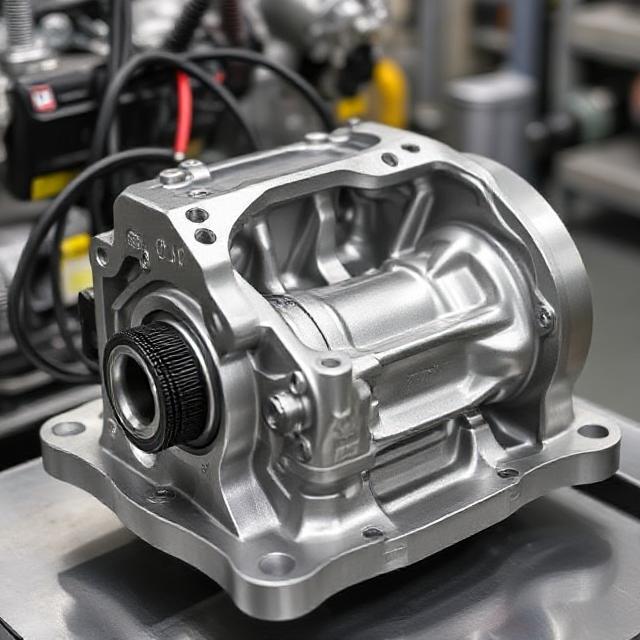
Coining is a precise metal stamping operation that involves applying high pressure to a metal workpiece between two dies. This process creates detailed, fine features, patterns, or textures on the surface by permanently deforming the metal. Unlike other stamping methods that mainly cut or bend, coining reshapes the metal’s surface to produce intricate designs or embossments.
Typically, the metal blank is placed between the upper and lower dies, which close with considerable force. This pressure causes the metal to flow and fill the die cavities, replicating every fine detail of the die pattern. The result is a part with sharp, well-defined features and a smooth surface finish.
Coining is often classified as a closed-die forging process and is commonly used for parts requiring high dimensional accuracy and surface quality. It can be performed on various metals, but harder metals respond better because they hold the fine details without distortion.
Coining offers several key benefits that make it valuable in manufacturing:
● High precision: It produces parts with extremely tight tolerances and intricate surface details.
● Improved surface finish: The process smooths the metal surface, reducing the need for secondary finishing.
● Enhanced strength: By cold working the metal, coining can increase its hardness and resistance to wear.
● Repeatability: Coining dies produce consistent parts in high volumes with minimal variation.
● Versatility: Suitable for creating logos, serial numbers, decorative patterns, or functional surface textures.
These advantages make coining ideal for applications where both aesthetics and precise mechanical properties matter.
Coining is widely used across industries for parts requiring detailed surface features and durability. Typical applications include:
● Coins and medals: Producing currency and commemorative pieces with intricate designs.
● Jewelry and decorative hardware: Adding fine patterns or logos to enhance appearance.
● Automotive components: Creating textured surfaces on small parts for grip or branding.
● Electronics: Forming precise contact points or embossed markings on connectors and terminals.
● Aerospace and medical devices: Producing parts with critical surface features that must meet tight specifications.
Because coining can combine decoration with functional improvements, it often plays a critical role in both branding and performance.
Embossing is a metal stamping operation that raises or recesses specific areas on a metal surface to create a three-dimensional design or pattern. This process uses matched male and female dies that press the metal sheet between them. The metal deforms plastically, taking the shape of the die’s design, resulting in a raised (embossed) or sunken (debossed) feature.
The process begins by placing a metal sheet between the embossing dies. When pressure is applied, the metal stretches and flows into the die cavities, forming the desired texture or pattern. Embossing can be done on flat or curved surfaces and often enhances both the aesthetics and functionality of the metal part.
Embossing requires precise control of pressure and die clearance to avoid tearing or wrinkling the metal. It also demands good die alignment to ensure consistent patterns without distortion. The process is suitable for both small decorative details and larger structural features.
Materials used in embossing must have good ductility and malleability to stretch without cracking. Common metals include:
● Aluminum: Highly machinable and lightweight, making it popular for decorative embossing.
● Steel: Offers strength and durability, suitable for structural embossing and industrial applications.
● Copper and Brass: Provide attractive finishes and are easy to emboss for decorative uses.
● Stainless Steel: Used when corrosion resistance and strength are needed alongside embossed patterns.
Metals that are too hard or brittle may crack during embossing. Choosing the right material thickness is also important; too thin can cause tearing, while too thick may require excessive force and risk damaging the dies.
Embossing enhances metal products in many industries by adding texture, branding, or structural features. Common applications include:
● Automotive: Embossed panels, decorative trims, and structural reinforcements.
● Appliances: Decorative covers, control panels, and branding logos.
● Architectural: Metal ceiling tiles, wall panels, and decorative facades.
● Metal Crafts: Artistic pieces, jewelry, and ornamental designs.
● Packaging: Aluminum cans and containers with embossed logos or patterns for brand identity.
Besides aesthetics, embossing can improve grip, add stiffness, or create channels for fluid flow or sound dampening. It often combines with other stamping operations like cutting or bending to complete complex part geometries.
Metal stamping operations, including blanking, punching, bending, stretching, coining, and embossing, offer diverse applications across industries. Each process has unique benefits, such as high precision, cost efficiency, and versatility. Choosing the right method depends on material properties and desired outcomes. As technology advances, future trends in metal stamping will enhance efficiency and precision. Zonze provides innovative metal stamping solutions, offering high-quality products that meet industry standards and deliver exceptional value to customers.
A: Automotive stamping involves using metal stamping operations like blanking, punching, and bending to produce automotive parts such as panels and brackets with precision and efficiency.
A: Punching is crucial in automotive stamping for creating precise holes in components, facilitating assembly and reducing weight without compromising strength.
A: Automotive stamping is often more cost-effective due to its high-speed production and material efficiency, especially for large volume runs.
A: Blanking in automotive stamping offers high precision, cost-effectiveness, and material efficiency, making it ideal for producing consistent flat parts.


